XPeng's automated production line for humanoid robots has commenced, leading to the first IRON robot's autonomous walk-off—an important step towards mass production.
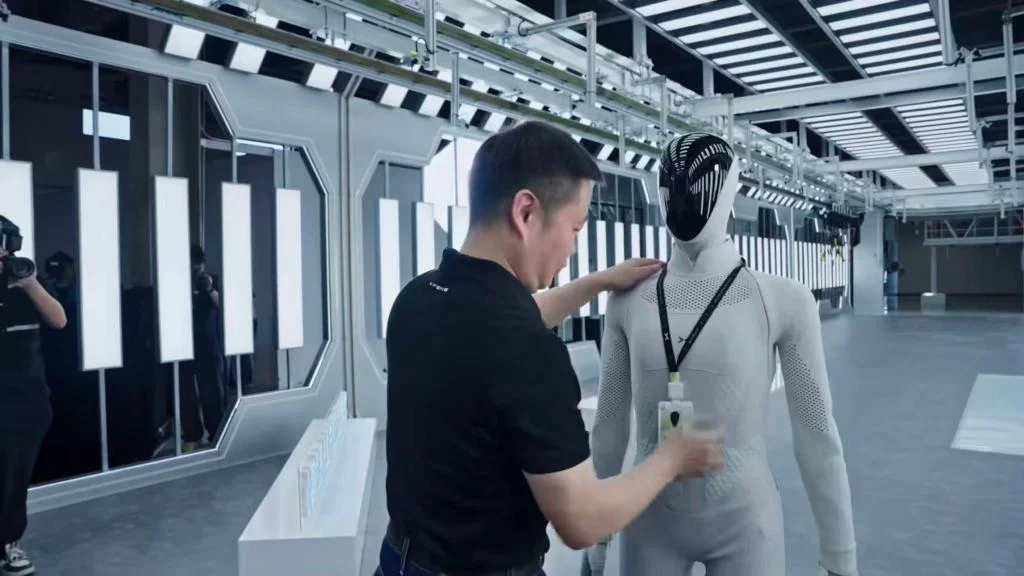
XPeng has taken a significant leap in the robotics sector by launching its automated production line for humanoid robots. This move, announced Tuesday, saw the company’s first IRON humanoid robot autonomously walk off the assembly line. The milestone signifies XPeng's transition from research and development to a focus on mass production, making it a notable player in the humanoid robotics space.
The Turning Point for XPeng
XPeng's announcement marks more than just a technical achievement; it represents a strategic pivot for the company. While many tech firms linger in the research phase, grappling with the uncertainties of new technologies, XPeng’s proactive step to establish a production line hints at their commitment to becoming a serious contender in the robot manufacturing industry. By choosing to automate robot production, XPeng isn't just improving efficiency; they’re signaling to the market that they intend to lead rather than follow.
The IRON Robot: A Look Under the Hood
According to XPeng, the IRON robot stands out as the world’s first high-level general-purpose humanoid robot to be produced via an automated system. The production line itself was crafted by XPeng's in-house team, integrating automotive manufacturing techniques with the specific needs of robotic assembly. Notably, over 80% of the production processes are automated.
What's intriguing is how XPeng adapted automotive manufacturing methodologies for robotics. While the automotive sector is known for its mass production capabilities, applying these methods to humanoid robots is fraught with challenges. The complexity of humanoid machines lies in their myriad of precise components; this intricacy can hinder the seamless application of automotive techniques. Many robotic components must be carefully assembled and calibrated, which may not lend itself to broad automation. And yet, XPeng's success in achieving high automation could set a critical precedent in the industry.
Efficiency and the Challenge Ahead
While humanoid robots are still in their early commercialization phase, with many relying on manual assembly, the introduction of this automated line could significantly enhance both efficiency and consistency in production, laying groundwork for potential scale-up. However, the complexity of humanoid robots—characterized by numerous precision components—renders direct application of automotive practices challenging. As such, it remains to be seen how efficiency and costs will measure up in mass production.
You have to consider the implications of this. Automating an assembly line is one thing, but ensuring that the robots meet rigorous safety and performance standards is another. If XPeng can navigate these intricacies successfully, they may very well set themselves apart from competitors who are still reliant on labor-intensive assembly. With a focus on efficiency, there's a potential for cost savings that could transform pricing strategies when these robots hit the market.
The Technical Specifications of IRON
IRON is integral to XPeng’s strategy surrounding physical AI, designed to function across various environments and perform multiple tasks. The robot boasts a flexible lattice structure, allowing it 76 degrees of freedom, including 21 in the hands alone. Equipped with three Turing AI chips, it can provide an impressive 2,250 TOPS of computing power. Notably, IRON operates locally, enabling it to analyze its surroundings and execute tasks independently, without needing remote guidance.
This emphasis on autonomy is in line with broader trends in robotics, where the demand for more intelligent systems is surging. The ability to operate independently not only increases the utility of these robots but also raises questions about their deployment areas. By performing tasks that are dangerous or monotonous, IRON could help ease labor shortages in various industries. What this means for you, particularly if you're in sectors such as manufacturing or logistics, is the potential for a dramatic shift in how work is conducted.
A Vision for the Future
Looking ahead, XPeng plans to ramp up IRON's production, targeting scaled output by the end of 2026 and initiating commercial deliveries in 2027. Initially, the robot is envisioned to handle dangerous and repetitive tasks before branching out into broader applications.
But ambitious timelines are common in tech, and they often lead to unmet expectations. XPeng has laid out a roadmap, but as the experience of other companies has shown, market acceptance and regulatory hurdles can throw timelines into disarray. Still, if they can stick to their schedule, they might capture a critical market share early on.
Funding and Market Position
XPeng is intensifying efforts in its robotics endeavor, recently securing over $900 million in funding, raising its valuation beyond $6.3 billion. This funding round was led by IDG Capital and included participation from Gaorong Capital, with notable investments from firms such as Tencent and Alibaba.
This influx of capital isn’t just beneficial for immediate production costs; it signifies investor confidence in XPeng’s long-term vision. In a sector known for its high financial barriers, substantial backing can mean the difference between success and stagnation. Investors are doing more than simply betting on a robot—they’re placing faith in a leader who could potentially drive the market forward.
Conclusion: A Lion in Waiting?
He Xiaopeng, CEO of XPeng, envisions a future where their humanoid robots are both human-like and safe, incorporating natural interactions and independent memory. Crucially, his goal is not merely to showcase robotic technology but to craft products that deliver tangible value, ultimately achieving mass production for real-world usage.
As XPeng steps confidently into the arena where tech meets automation, it remains to be seen if they can deliver on their ambitious promises. There's potential for both disruption and innovation, but also challenges that could slow their momentum. The real question will be: can XPeng transform the vision of humanoid robots into a mainstream reality in the coming years?


Discussion
Sign in to join the discussion.