Excelland Robotics is reshaping the commercial landscape with tailored robotic solutions that enhance efficiency and redefine service delivery across industries.
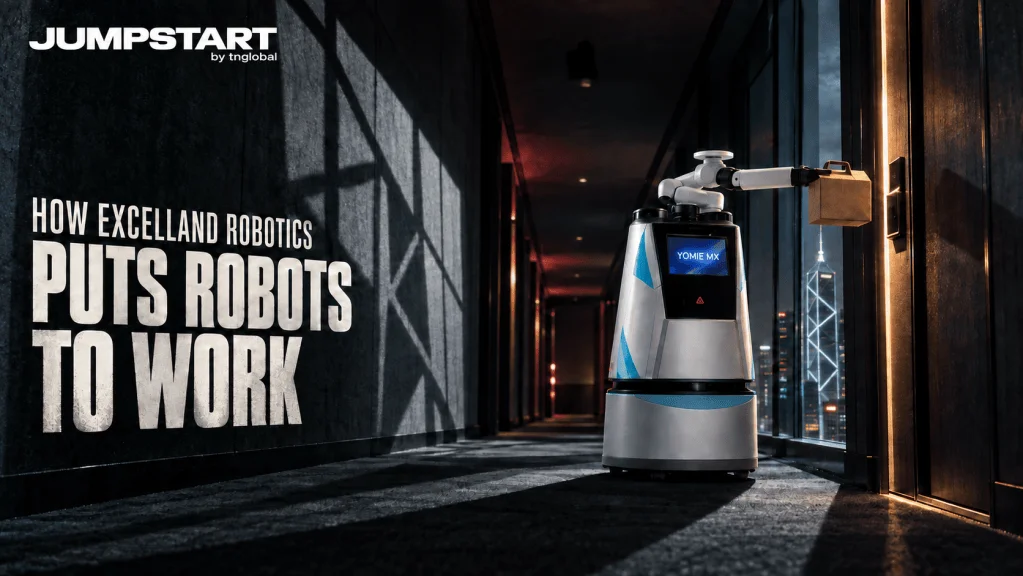
In the realm of commercial robotics, Excelland Robotics is carving a unique niche, demonstrating that functionality often eclipses flashiness. Founded in Shenzhen in 2013, Excelland has evolved from creating control systems to deploying a diverse portfolio of robots that serve everyday tasks across various sectors, including hotels, campuses, and entertainment venues.
As of March 2026, Excelland's growth trajectory is marked by significant milestones, with over 114,600 robots sold to more than 5,100 clients globally. This success isn’t just in numbers; it reflects an astute strategy that embraces task-specific design and gradual technology enhancement within actual operating environments. Rather than fixating on one standout product, Excelland has developed a family of robots, each tailored for specific repetitive and measurable tasks that are typically difficult to staff efficiently.
Launching with Delivery Robots
Excelland's foray into commercial robotics commenced with Yomie, its inaugural indoor delivery robot introduced in 2016. This timing was strategic, as many businesses were grappling with rising operational costs and high employee turnover. Yomie served to alleviate some of these pressures by handling mundane delivery tasks, allowing human staff to concentrate on more complex interactions.
The following year saw the introduction of Yodee, a larger-capacity variant aimed at the entertainment sector. In 2019, cumulative shipments reached the tally of 2,500 units, and by 2021, this figure had surpassed 10,000. Although these numbers may seem modest compared to consumer tech giants, the realities of commercial robotics hinge on consistent daily performance, where a machine's ability to function reliably in real-world settings is paramount.
Adapting to Challenging Environments
Building on its initial success, Excelland expanded its offerings to include indoor cleaning robots in 2022 and outdoor models in 2023. This strategic pivot marked a leap into tougher operational conditions, moving beyond predictable indoor corridors to manage environments filled with dynamic challenges such as temperature fluctuations and vehicle traffic.
Excelland's advancements reflect a shift in technology utilization; the company transitioned from relying primarily on LiDAR to adopting a comprehensive multi-sensor setup that incorporates cameras alongside other sensors. This allows its robots to navigate with greater autonomy, process environmental data, and adapt in real-time to changing conditions.
The latest Yomie iteration, the Yomie MX, exemplifies these advancements. Launched in March 2026, it can traverse multiple floors without necessitating retrofitted elevator systems. Enhanced with visual recognition capabilities, the robot autonomously identifies and presses elevator buttons—showcasing a complex interplay of perception, positioning, and physical interaction that’s essential for real-world implementations.
Beyond Robots: A Cloud-Integrated Ecosystem
Excelland’s operational model thrives on a dual architecture, integrating robotics with cloud capabilities. This synergy allows for the optimization of various functions like navigation, data management, and task scheduling. The versatility of its technology ensures that advancements in one robot model can benefit others across different applications.
Furthermore, Excelland is leveraging its technological prowess beyond robotics. Its Yoware platform delivers AI vision solutions to sectors like construction, education, and food production, indicating a pivot from pure hardware manufacturing to a broader technology service model. In 2025, AI vision solutions accounted for RMB119.2 million in revenue, enhancing overall financial stability.
Evolving Customer Engagement and Revenue Strategies
Excelland is shifting its business model by offering robots-as-a-service. In this arrangement, the company retains ownership of the robots deployed at client sites while charging based on usage, such as successful deliveries or operational hours for cleaning robots. This model reduces the initial financial burden on customers, encouraging adoption by emphasizing operational efficiency and cost-reduction gains.
This transition has led to revenue growth, rising from RMB243.8 million in 2023 to RMB317.7 million by 2025. However, Excelland reported significant net losses, highlighting the challenges of scaling operations as it builds and manages a fleet of robots. The firm’s reliance on a concentrated customer base—with the top five clients making up more than 76% of revenue—also raises concerns over sustainability amid competitive pricing pressures.
Embarking on a Global Initiative
Looking ahead, Excelland plans to extend its robotic solutions to international markets, targeting regions like Japan, South Korea, and Southeast Asia. Early efforts have seen success, with robots already operational in these areas. However, navigating local regulations and adapting to different operational landscapes will be crucial.
The upcoming Hong Kong IPO, where the company is set to trade under code 03231, is not merely an endgame but a mechanism to secure funds for R&D, marketing, and strategic investments aimed at broadening its market presence. Investors will be watching closely to see if Excelland can ride the wave of its current operational successes into a wider array of global opportunities.
Essentially, Excelland’s journey highlights that success in robotics isn't solely about captivating demonstrations. It hinges on consistent, reliable performance in real-world applications, ensuring that these machines can integrate seamlessly into the workplace and deliver measurable outcomes.



Discussion
Sign in to join the discussion.