Discover essential features dependency mocking software must have to effectively support cloud-native architectures and ensure test accuracy.
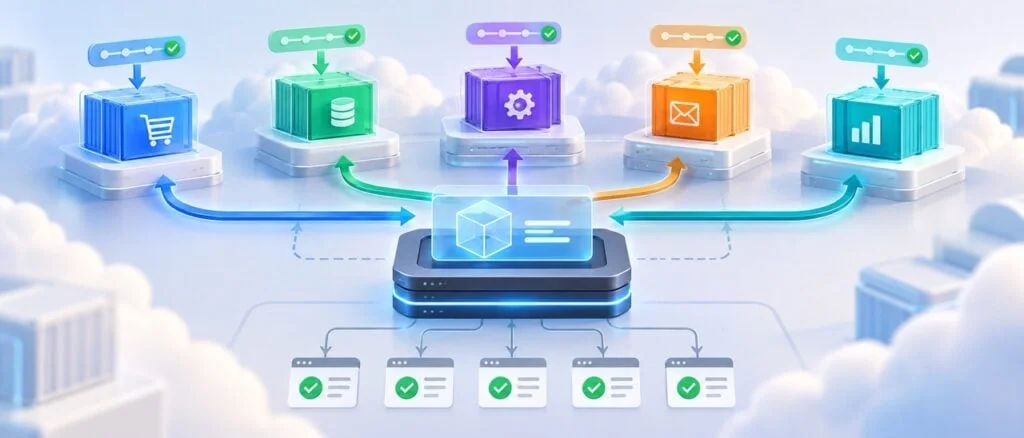
Understanding the Challenge of Dependency Mocking in Cloud Native Systems
Dependency mocking tools have struggled to keep pace with the evolution of cloud native architectures. Historically, these tools were developed for environments with predictable service interactions, long release cycles, and clear upstream dependencies. In stark contrast, cloud native architectures emphasize decentralization and rapid, independent deployment, complicating the testing landscape.
In these modern setups, multiple services deploy autonomously, often without any synchronized change management. This shift highlights a significant gap: as independent teams enhance their services, ongoing integration tests can become misaligned with reality, leading to growing discrepancies in test accuracy. The common dependency mocking solutions fall short in this dynamic and fast-moving environment.
Independent Deployment: A New Maintenance Paradigm
In a cloud native setup, services like payment, inventory, and notification deploy independently, driven by their testing outcomes rather than coordinated release dates. For instance, if a payment service updates its behavior, it might not inform the order service about the changes, leaving the order service with outdated mocks.
The traditional dependency mocking software lacks mechanisms to automatically track these deployment events. With tools like WireMock or handcrafted mock fixtures, significant updates can occur unknowingly, causing test suites to misrepresent service interactions. As a result, tests may appear successful while accumulated behavioral debt continues to grow with each upstream deployment.
Key Features for Reliable Dependency Mocking Tools
To effectively support cloud native architectures, dependency mocking software must integrate several pivotal capabilities:
1. Awareness of Deployment Events
The foremost requirement is an automated system that recognizes deployment events from upstream services. Instead of relying on communication tools like Slack, a dependency mocking tool should react to changes, triggering the re-validation of mock configurations as soon as a service deploys new code.
2. Real-Time Behavior Capture
Documentation often lags behind actual service behavior in cloud native environments. Changes—such as new response fields or alterations in error handling—often go unnoted, rendering mocks that rely solely on outdated specifications ineffective. A robust dependency mocking tool should analyze interactions in real-time, ensuring that mocks reflect current service behavior rather than historical documentation.
3. Management of Non-Deterministic Fields
Complexity arises from real-time service responses containing variable fields, like request IDs or timestamps, which can disrupt test results. Efficient dependency mocking tools need to distinguish these inherently variable data from codebase discrepancies, reducing unnecessary test failures.
4. Visibility into Cross-Service Changes
In environments where services evolve independently, awareness of what has changed in upstream services becomes critical. Tools must provide visibility into specific alterations—for instance, when a response structure shifts. This detailed information helps teams decide whether a mock update necessitates code modifications or can be managed through simple refreshes.
A Distinct Approach with eBPF Technology
Keploy offers a unique response to these needs through eBPF-based traffic capture. This method allows for kernel-level interception of service interactions, providing real-time mocks that represent actual behaviors rather than just code specifications. This approach retains compatibility across various programming languages, making it effective in polyglot cloud native architectures, where different services might operate using diverse tech stacks.
Moreover, Keploy integrates seamlessly into CI/CD workflows, ensuring that mocks are refreshed in tandem with real-service alterations.
Implications for Tool Selection in Cloud Native Environments
When evaluating dependency mocking solutions for cloud native ecosystems, the focus shifts from basic setup and documentation quality to more pressing functional capabilities. Decision-makers should ask specific questions: Is the tool aware of service deployments? Can it capture current behavior? Does it transparently highlight behavioral changes? Moreover, does it scale well across the service mesh?
Tools that effectively address these questions offer substantial value in maintaining integration test accuracy amidst a landscape characterized by rapid service evolution. Conversely, using tools designed for traditional architectures without adapting them may lead to unavoidable declines in testing efficacy as services develop further.
In short, cloud native architectures demand a reevaluation of how dependency mocking software interacts with multiple services, prioritizing flexibility and responsiveness to the realities of continuous deployment.



Discussion
Sign in to join the discussion.