A recent evaluation shows that leading AI chatbots, including ChatGPT and Claude, struggle with providing timely and accurate information.
AI chatbots often provide answers to a wide range of inquiries, but they can falter when it comes to current events. My recent tests revealed that even with web search features, these models can be surprisingly outdated. This presents a dual challenge: not only must users depend on the accuracy of the AI, but they must also grapple with the limitations of its knowledge.
Knowledge Cutoff and Its Impact
Every AI model has a knowledge cutoff, and this can significantly affect its reliability. An AI released today isn't necessarily equipped with data from yesterday, leaving potential gaps of weeks or even months in its understanding of recent developments. This limitation is particularly concerning when you consider how quickly news cycles can change, often leaving AI models several steps behind reality. In my exploration of the timeliness of leading AI chatbots, I conducted a series of questions across ChatGPT, Claude, and Gemini.
1. What is the newest iPhone Apple has released?
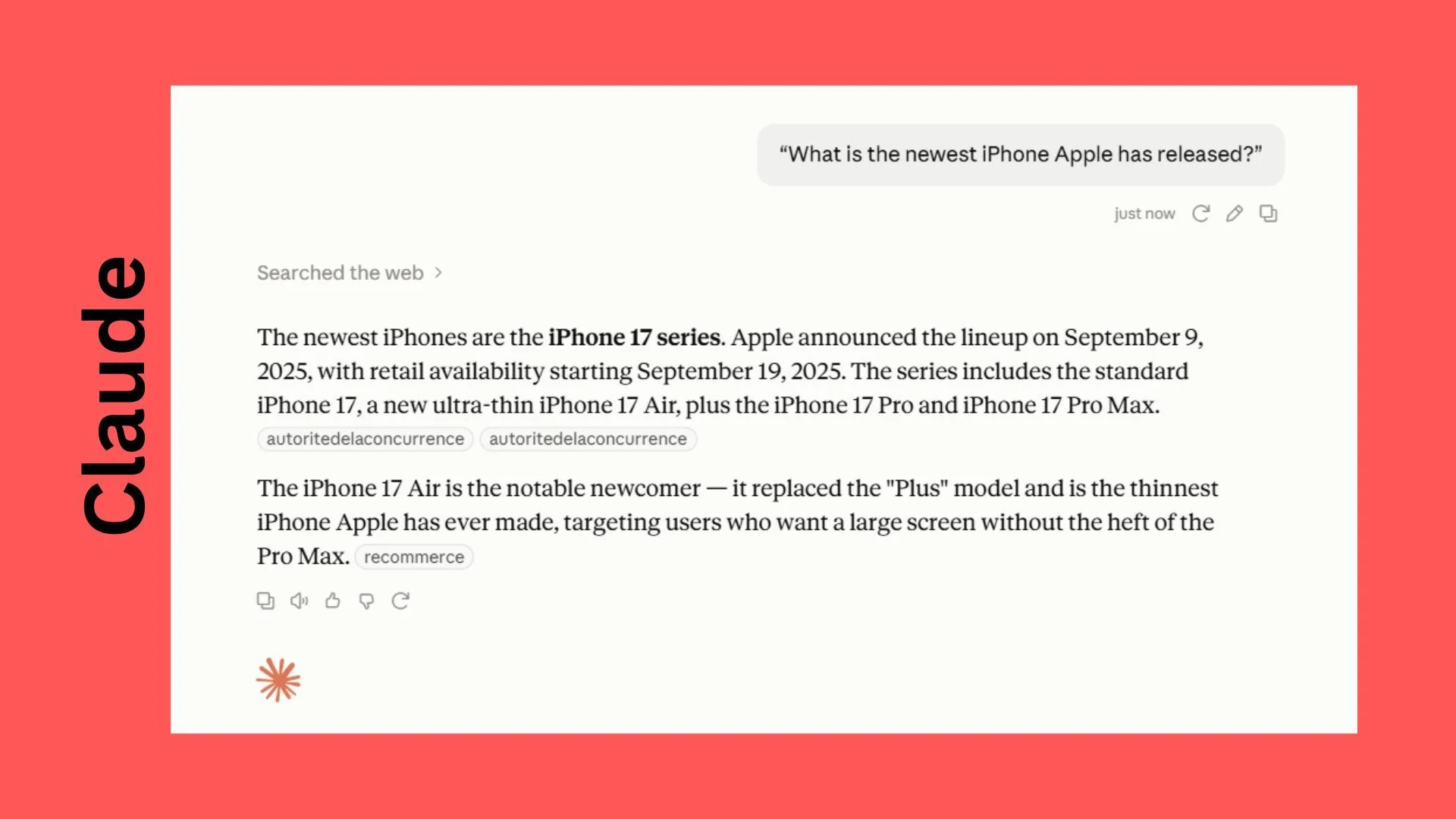
Both ChatGPT and Gemini accurately identified Apple's latest offerings: the iPhone 18 Pro, iPhone 18 Pro Max, and the iPhone Duo, Apple's first foldable smartphone, unveiled during their recent event. Notably, Claude fell behind, incorrectly stating the latest models were from the iPhone 17 series. This illustrates the disparities in real-time knowledge that can affect user decision-making.
2. What is the newest flagship Claude model?
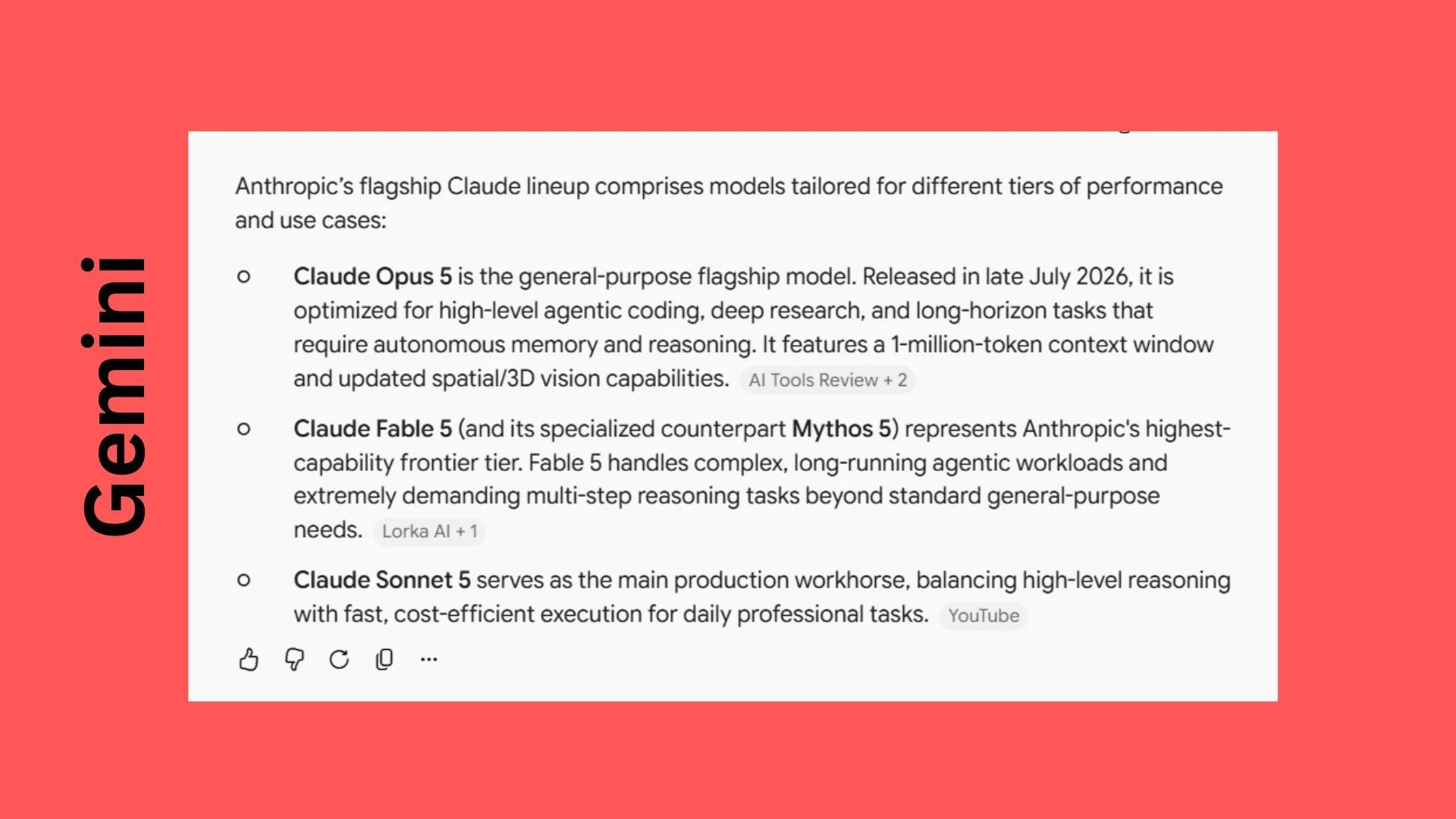
This question reflects the rapid evolution in AI models. ChatGPT was on target, identifying "Claude Fable 5.1" as the latest release from Anthropic. In contrast, Claude 4.6 seemed confused about availability, suggesting older models. Gemini, too, lagged behind, erroneously claiming that Claude Opus 5 and Mythos 5 were the latest offerings, missing the more recent Fable version. This can mislead consumers or developers who are keen on staying up-to-date.
3. Who won the World Cup in 2026?

Interestingly, all three chatbots correctly answered this question regarding the 2026 World Cup, acknowledging Spain's victory and mentioning significant players like Ferran Torres and various award winners. This consistency suggests a deeper underlying dataset for sports events, likely bolstered by real-time updates, which might not be as prevalent in other areas.
4. What major new feature did Apple add to Siri in iOS 27?
Each chatbot recognized that the newest addition is Siri AI, defined by Claude as a "ChatGPT-like version of Siri." However, there’s irony in Claude’s oversight of the recent iPhone updates, given its praise for Siri's AI capabilities. This inconsistency points to a major issue: chatbots can praise advancements while poorly tracking their context and implications.
5. Does Google Home offer 3rd party AI integration?
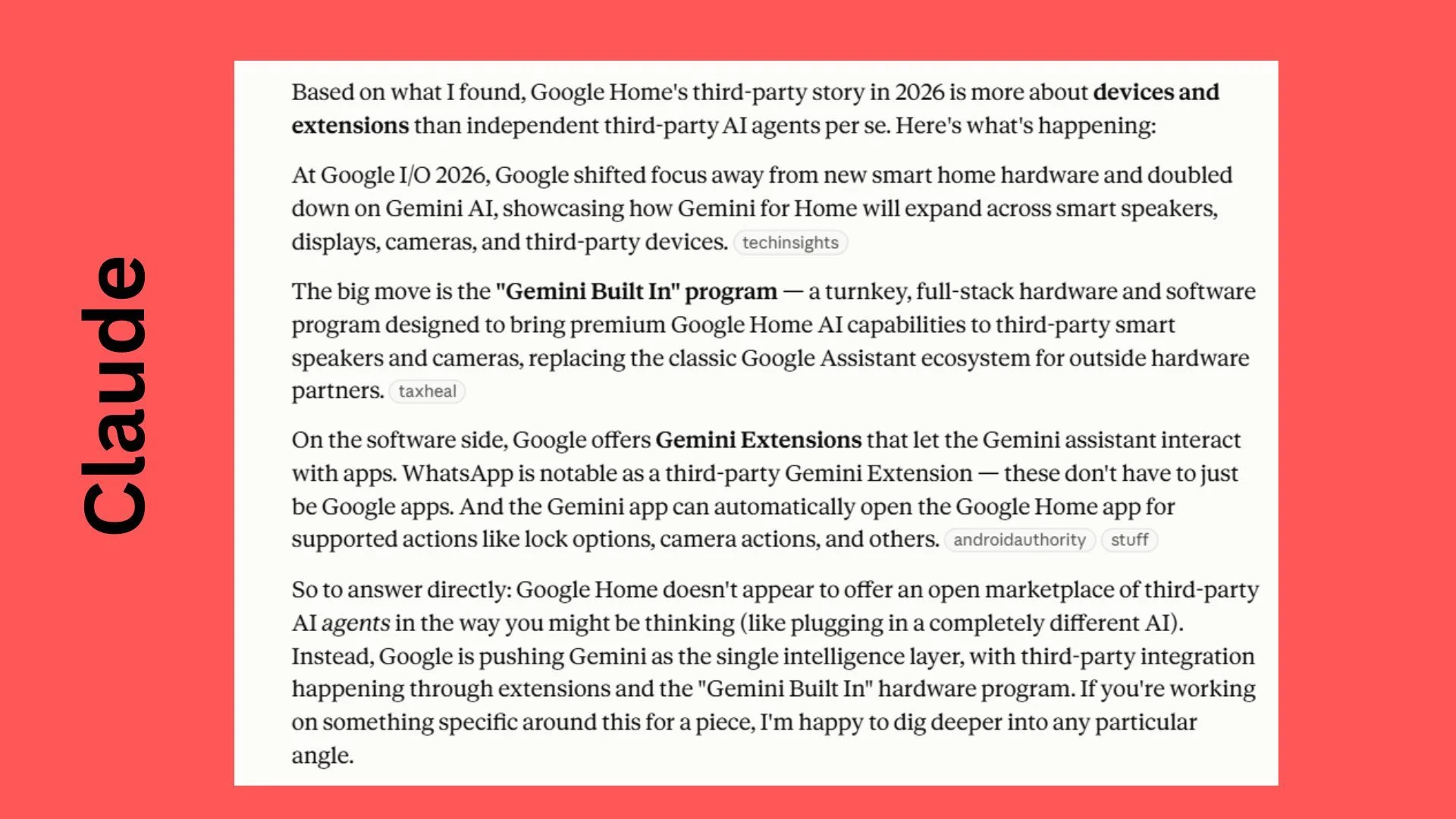
ChatGPT and Gemini confirmed that Google Home does support 3rd party AI integration, while Claude lagged behind, missing the latest announcements that even mention Claude in their documentation related to MCP Home. This inconsistency among AI responses raises a pivotal question about the reliability of AI-generated information.
The Takeaway
The tests highlight that even when AI models are offered new search functionalities, their reliance on outdated training data can lead to misinformation. Evidently, each model's performance varies significantly, which impacts users' trust and decision-making processes. For those relying on AI, ongoing fact-checking is essential as the technology continues to mature.
Implications and Future Outlook
As chatbots become more integrated into daily decision-making processes, the implications of their accuracy or inaccuracy cannot be overstated. If you're working in this space—whether for development, marketing, or consumer education—this is an area you'll need to keep a close eye on. The technology is improving, but these models are not infallible. The risk of misinformation is very real. You must consider not just the information provided but also question its timeliness and relevance. After all, this gap can create significant ripple effects, affecting everything from business strategies to personal choices.



Discussion
Sign in to join the discussion.