The iPhone 18 Pro and Pro Max with A20 Pro chipsets demonstrate impressive performance gains, dominating benchmarks against competitors while improving AI capabilities.
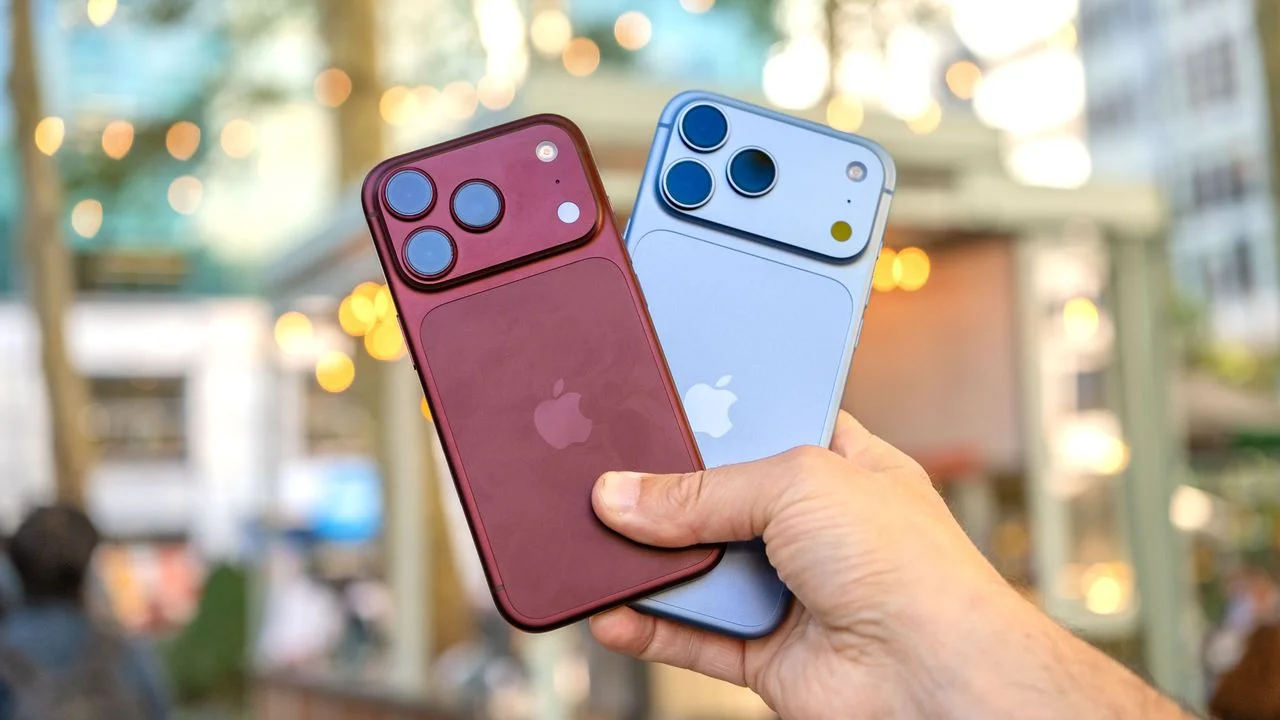
Apple's recent launch of the iPhone 18 Pro and iPhone 18 Pro Max showcases the power of the A20 Pro chipset. Promising better speed and efficiency, this new generation not only improves graphics performance but also enhances AI processing capabilities. The question remains, however: how pronounced are these advancements in real-world scenarios?
A20 Pro Chipset: Performance Overview
The A20 Pro introduces a significant shift with its 2nm architecture that improves transistor density compared to last year's 3nm A19 Pro. This transition is essential; it allows Apple to incorporate a new 6-core CPU design, featuring two "super cores" that are 20% faster, complemented by four efficiency cores. Furthermore, the A20 Pro’s seven-core GPU boasts a remarkable 40% boost in graphics performance, while a second neural engine doubles the AI processing power.
Benchmarking the iPhone 18 Pro
After thorough benchmarking tests using Geekbench, the results indicate that the iPhone 18 Pro and Pro Max truly outperform their predecessors and leading competitors. In Geekbench 6, the iPhone 18 Pro achieved scores of 4,735 in single-core and 12,800 in multi-core tests, while the Pro Max secured 4,741 and 12,789, respectively. When tested with the latest Geekbench 7, the numbers remained impressive at 4,022 / 11,543 for the Pro and 4,025 / 11,525 for the Pro Max.
By comparison, the previous iPhone 17 Pro scored significantly lower, with Geekbench results showing 3,834 / 9,988 in Geekbench 6 and 3,138 / 8,692 in Geekbench 7. Samsung’s flagship Galaxy S26 Ultra also lagged behind with scores of 3,785 / 11,563 (Geekbench 6) and 3,149 / 10,612 (Geekbench 7), confirming Apple’s lead in sheer processing performance.
Graphics Capability Advancements
Historically, graphics performance has often been an area where Apple's chips trailed behind Snapdragon counterparts. However, the A20 Pro has markedly shifted that narrative. In the 3DMark Solar Bay Unlimited benchmark, the iPhone 18 Pro achieved an average frame rate of 61.93 fps with a score of 16,288. The Pro Max surpassed this with an impressive average of 67.9 fps and a score of 17,850. Meanwhile, the Galaxy S26 Ultra recorded a mere 49.37 fps with a score of 12,984, further demonstrating the A20 Pro's superiority.
AI Processing Insights
The AI prowess of the A20 Pro, bolstered by its dual neural engines, has seen significant improvement yet still has a ways to go compared to its main rival, the Galaxy S26 Ultra. In the Geekbench AI test, the iPhone 18 Pro scored 69,245, which increased to 71,974 for the Pro Max. These scores are notable improvements over the iPhone 17 Pro's 49,050 but still fall short of the S26 Ultra, which boasts a score of 83,047, highlighting further room for growth in Apple's AI capabilities.
Sustained Performance Capabilities
While peak performance is impressive, Apple also focused on sustained performance. The iPhone 18 series introduces a redesigned vapor chamber with three times the surface area compared to its predecessor, a move designed to enhance thermal management. In our stability test using 3DMark Wild Life Extreme, the iPhone 18 Pro Max achieved a stability score of 79.4%, marking a substantial improvement from the earlier model's 65.2%. The 18 Pro saw a modest increase from 61.1% to 62.8%. Both values position the iPhones notably above the Galaxy S26 Ultra's 53.9% stability rating.
Conclusion on A20 Pro Innovations
Apple's strides with the A20 Pro chipset are evident across all performance metrics, especially when compared to the iPhone 17 Pro and other flagship devices. Although AI performance needs further enhancement, the overall boost in CPU and graphics capabilities positions the iPhone 18 Pro series at the forefront of the current smartphone market.
As we anticipate upcoming advancements from competitors like Samsung—especially with the Snapdragon Summit around the corner—Apple's lead in processing power remains compelling. The A20 Pro appears to signal a strong statement of intent from Apple, reaffirming its commitment to maintaining a competitive edge in the smartphone arena.



Discussion
Sign in to join the discussion.