China's humanoid robotics sector is diversifying rapidly, with startups leveraging innovative technologies to tackle real-world applications across various industries.
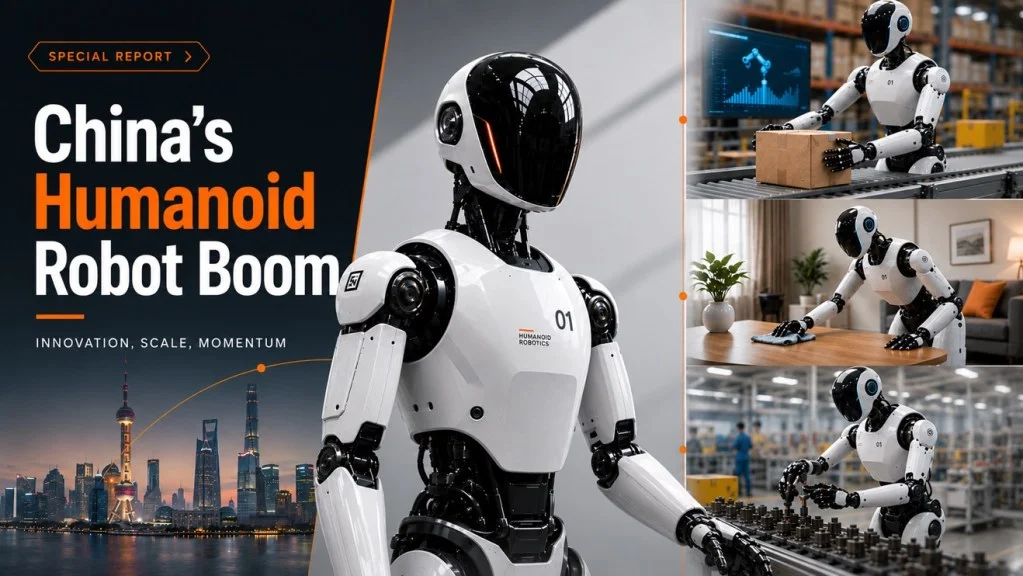
China is witnessing a significant shift in its humanoid robotics landscape, transitioning from manufacturing showcases to practical applications in diverse settings. While companies like Unitree have considerably raised the profile of Chinese robotics with their humanoid and quadruped machines, the broader wave is characterized by a surge in varied use cases addressing specific tasks in real-world scenarios.
Take Unitree, for instance. The firm made headlines in August 2026 when it listed on Shanghai’s STAR Market, with shares that skyrocketed to RMB 1,100 on opening day—629% above its offering price. Though the stock has since declined significantly, the company reported a strong RMB 1.15 billion in revenue during the first half of 2026, marking a 48.5% increase year-on-year. Meanwhile, they have produced approximately 18,000 bipedal humanoid robots, showcasing impressive operational capabilities amidst market volatility.
The attention isn’t just domestic; international investors are also keen on China’s robotics advancements. For instance, the KOID humanoid-robotics ETF, managed by KraneShares, includes Unitree, while Defiance has launched a U.S.-listed exchange-traded fund that focuses on this burgeoning ecosystem.
Shifting from Demonstrations to Everyday Work
Another dimension of this boom is encapsulated by companies like Zerith, which focuses on practical applications, starting with basic human tasks. Founded in 2025 by Tsinghua University's robotics enthusiasts, Zerith has introduced its wheeled H1 robot at a price of RMB 199,000 ($29,000), with global shipments commencing in the second quarter of 2026. Its robots are equipped with advanced grasping systems that enable them to adapt to various objects and environments.
By January 2026, Zerith robots were already operational in notable commercial entities, including Hefei Xinqiao International Airport. By March, pilot robot stores launched in Shanghai, achieving significant sales during peak holiday seasons. Following a successful fundraising round, Zerith’s orders surged past RMB 100 million, illustrating strong market demand.
Meanwhile, another innovator, RobotEra, specializes in sophisticated dexterous manipulation. Founded in 2023 by academic professionals from Tsinghua University, the firm's humanoid robots feature five-fingered hands designed for logistics applications. Their technology is already collaborating with major logistics firms such as China Post and SF Express, affirming their role in enhancing operational efficiency within distribution channels. Capitalizing on this potential, RobotEra secured investments exceeding RMB 2 billion from various funding rounds in 2026 alone, reflecting investor confidence in the robotics domain.
Integrating Robots in Human-Centric Environments
Expanding beyond industrial uses, robots are increasingly being integrated into service-oriented roles, where interaction with humans is paramount. At the Shangri-La hotel in Shanghai, a fleet of Keenon robots manages multiple tasks ranging from greetings to room service and housekeeping. By improving efficiency, these robots have reduced the demand for repetitive labor by about 30% and boosted service response times by close to 40%.
Founded in 2010, Keenon has sold over 100,000 robots globally, indicating robust demand across a range of sectors including restaurants, hotels, and retail establishments. Their approach emphasizes role specialization rather than a singular humanoid, allowing for precise targeting of automation where it delivers measurable outcomes.
In a parallel effort, Shenzhen-based Digital Huaxia is working on humanoid robots that emphasize human-like interactions, incorporating facial recognition, emotion detection, and voice communication. Their deployments span sectors like finance and healthcare, aiming to enhance customer engagement and service efficiency. Through strategic partnerships, the company has already booked orders worth RMB 100 million within its first operational year.
Diverse Paths to Commercialization
The range of companies and approaches highlights how China's humanoid robot boom is evolving into a broad, multi-faceted ecosystem. It's not just about creating a single solution; rather, a mix of products and business models is shaping a dynamic market landscape. As these technologies are refined and adapted for real-world applications, the industry is set to explore new avenues that prove valuable not only in factories but also in everyday service environments.



Discussion
Sign in to join the discussion.