Huawei introduces the powerful Kirin 9050 Pro chip alongside the Mate XT 2, showcasing significant performance improvements and innovative design.
New Technologies in the Kirin 9050 Pro
Huawei has unveiled its Kirin 9050 Pro chip, marking its return to flagship chip releases after a six-year hiatus, coinciding with the launch of the HUAWEI Mate XT 2. This new chip represents a notable advancement, boasting a 42% performance enhancement over its predecessor. This isn't just a numbers game; it's a strategic shift for Huawei as it re-establishes itself in the competitive semiconductor arena. The chip's introduction also signals Huawei's ambition to reclaim its position in a market increasingly dominated by competitors like Qualcomm and Apple.
Advanced Chip Design
The Kirin 9050 Pro employs a unique two-layer vertical stacking architecture built on the Tao Law technology framework. This design innovation includes vertical interconnects, which minimize signal transmission paths significantly. Unlike traditional methods that rely on geometric scaling, this approach increases transistor density dramatically — from 155 million transistors per square millimeter to around 238 million. Performance cores can achieve impressive peak frequencies of 3.1GHz, putting it within reach of leading competitors. The high-speed on-chip global network also sees a 55% reduction in occupied area, which means that more functionality can be packed into less space while maintaining efficiency. Notably, SRAM operating frequency has surged by over 40%, allowing for faster data access and processing capabilities crucial for modern applications.
Performance Metrics
Huawei touts the Kirin 9050 Pro's enhanced capabilities with its Lingxi CPU hyperthreading technology, which yields a 24% boost in peak single-core performance. Multi-core performance is even more impressive, soaring by 52%. These performance metrics could be particularly appealing for power users, as the enhanced processing power can translate into smoother operations for demanding applications such as video editing and high-end gaming. The chip is also optimized for hardware-accelerated real-time ray tracing, capable of conducting up to 50 million calculations per second, a remarkable feature for mobile gaming. All while powering HarmonyOS 7, this integration is designed to improve battery life by an additional 36 minutes, a critical consideration for users on the go.
Introducing the Mate XT 2
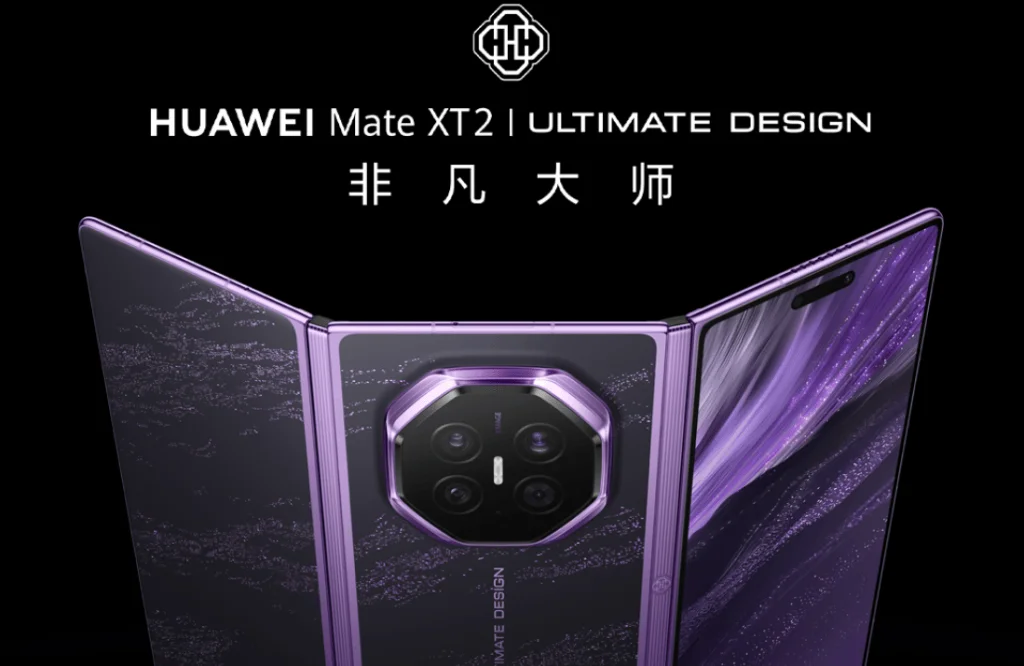
The Mate XT 2 Ultimate debuts the Kirin 9050 Pro and comes with an eye-catching wing-shaped G-type dual-inward-folding design. The device features a vibrant 6.5-inch outer display and a sizeable 10.2-inch inner display when fully opened, weighing in at 299 grams. This design not only makes a statement but also addresses the practical needs of multitasking users who desire a compact device that expands into a functional tablet. Furthermore, it boasts a foldable Lingdun privacy display, targeting security-conscious consumers. An upgraded Red Maple camera system enhances color reproduction by an impressive 95% compared to earlier models, which could be vital for mobile photographers looking for quality on the go. Additionally, with a 5,600mAh battery and 50W wireless charging capabilities, this phone is built for performance without the hassle of frequent charging.
Market Positioning and Availability
The HUAWEI Mate XT 2 Ultimate comes with a starting price of RMB 19,999 (approximately $2,980) and is set for release on September 12. It's important to note that this pricing positions the device as a premium offering aimed squarely at affluent consumers. A bundle including a stylus will be available from September 23, which might resonate well with users who appreciate the precision that a stylus provides — especially for sketching and note-taking, aligning with the device's design philosophy.
Synergy Between Hardware and Software
The integration of the Kirin 9050 Pro with Huawei's HarmonyOS 7 is particularly significant. This combination allows for better optimization between chip architecture and user experience, essential given the complexities of a tri-folding smartphone. Such synergy not just enhances performance scheduling and multitasking, but also ensures smoother app compatibility, particularly across larger display formats. This interplay enhances user engagement, which might lead to increased brand loyalty among existing Huawei users.
The Road Ahead
As the Kirin 9050 Pro rolls out in additional flagship devices, its true capabilities in daily applications, gaming, and power management will come into sharper focus. Observers will keenly monitor how Huawei leverages architectural advances and hardware-software synergy to navigate challenges stemming from supply chain and manufacturing limitations. If you're working in this space, here's the thing: the Kirin 9050 Pro’s performance metrics will likely have a profound impact on Huawei's ability to capture market share. Consumers are looking for reliability and efficiency; devices that excel in these areas can set trends in the smartphone market. The implications of Huawei's flagship chip could echo throughout the industry, particularly for brands looking to catch up. And this is the part most people overlook: in an era where performance can make or break a device, how Huawei chooses to position this technology will be pivotal for its future.



Discussion
Sign in to join the discussion.