Alibaba Cloud has reduced its data center delivery time to 100 days through a modular approach, marking a shift in AI infrastructure construction.
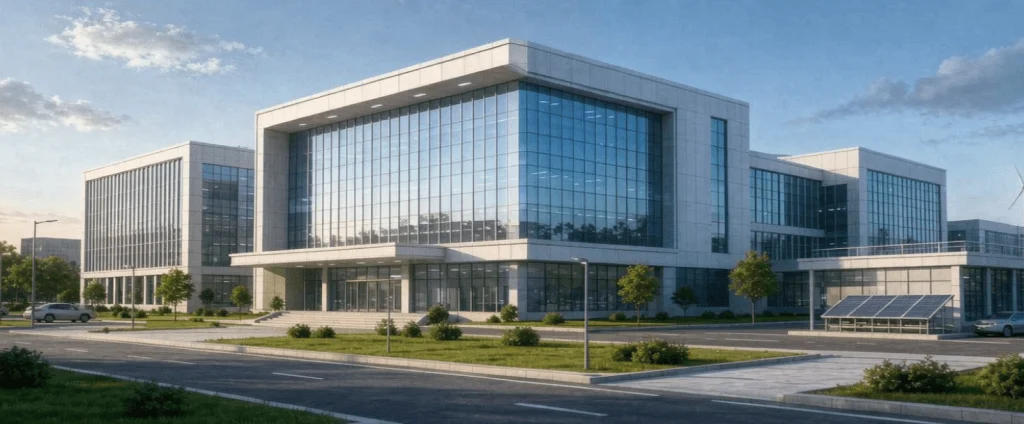
As competition in the AI sector intensifies, the focus is shifting from simply acquiring powerful models and GPUs to enhancing data center infrastructure. This transition is evident in Alibaba Cloud's recent announcement, where it revealed a significant reduction in the delivery time for large-scale AI data centers (AIDCs) to just 100 days.
The ability to assemble chips and servers is one thing, but building a data center has long been a more complex challenge. Traditional data center construction typically stretches nearly a year. This process involves numerous stages, completed sequentially, and often running into delays due to various logistical hurdles. Alibaba Cloud has tackled this issue head-on with a fully modular design architecture, which is designed to reshape how data centers are constructed.
Using this modular design, components can be manufactured off-site and then assembled on location. This means that tasks that previously required step-by-step completion can now occur simultaneously, allowing for accelerated timelines. With demand for AI capabilities soaring, this method is vital for preventing excess computing power from going idle as infrastructures struggle to keep up. It's a shift that allows Alibaba Cloud to respond more agilely to market needs.
Notably, the reduction in delivery time has coincided with a more than 10% decrease in construction costs compared to the prior generation of data centers, showcasing Alibaba Cloud's efficiency in this hyper-competitive market. This kind of cost-saving combined with expedited timelines will likely attract customers eager to minimize expenses while maximizing output.
Reimagining Data Center Construction
The modular design fundamentally changes the approach to data center construction, likening it more to stacking building blocks than to traditional brick-and-mortar engineering. Each element is standardized, manufactured in factories, then transported for rapid assembly, transforming what has been an intricate process into a more streamlined operation. Particularly in a sector where agility is paramount, this method allows companies to scale faster and more effectively.
Alibaba Cloud's ambitions don't stop with faster builds; it aims to double its global production capacity for modular data centers by 2026. This growth signifies a notable shift away from sporadic engineering responses to a more systematic production of scalable infrastructure products. Such scalability means that firms can replicate successful models in various regional markets without the prior obstacles tied to traditional construction methods.
The Importance of Speed in AI Infrastructure
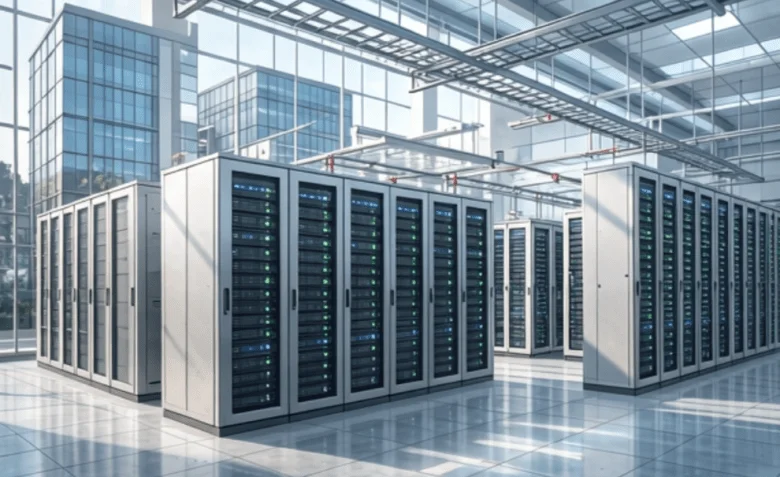
The race for AI supremacy is increasingly about how quickly firms can translate their GPU investments into usable computing power. Until now, the emphasis was largely on individual AI model performance or the sheer volume of GPUs that a company could amass. Yet, as AI applications grow more sophisticated, other factors such as power management, networking efficiency, thermal regulation, and expedited data center construction are playing crucial roles. These elements are often overlooked, but they literally underpin a company's ability to deliver AI solutions.
The reduction in delivery time to 100 days for AIDCs exemplifies Alibaba Cloud’s strategy to convert the AI arms race into an infrastructure speed race. Cloud providers' competitive edge is no longer about who has the most GPUs but rather how quickly they can adapt and deploy those resources for immediate use. It’s a shift in the strategic prioritization that fundamentally changes the rules of competition.

As the demand for adaptable AI infrastructure increases, the ability to efficiently build and deploy data centers will likely emerge as a critical differentiator for cloud providers. This shift represents a paradigm change, not just in how data centers are constructed, but in the broader approach to delivering AI capabilities at scale. If you're working in this space, this will be a significant factor in your planning and strategy.
Implications for the Future of AI Infrastructure
The implications of this transition are profound. For businesses, faster construction means reduced time to market for AI services, which can translate to a first-mover advantage in rapidly changing industries. Standardized modular designs can lead to increased competition, as companies who previously lagged in infrastructure can suddenly find the capacity needed to jump into AI services with both feet.
Moreover, we could see new players emerge. Lower barriers to entry in terms of data center construction may entice smaller firms or startups who previously didn't have the capital or expertise to build traditional data centers. That's the part most people overlook — the democratization of AI infrastructure could lead to a surge in innovation from unexpected quarters.
Ultimately, as more companies adopt modular designs and prioritize speed, we might witness a ripple effect across the industry. The collective push for faster data centers can lead to advancements in construction technology overall, influenced by the greater demands for agility in the AI sector. This is an opportunity for companies to rethink not just how they build data centers, but how they engineer entire systems to cope with the pressures of modern AI demands.



Discussion
Sign in to join the discussion.