AI tools like K8sGPT enhance Kubernetes troubleshooting while emphasizing the need for careful permissions and operational boundaries.
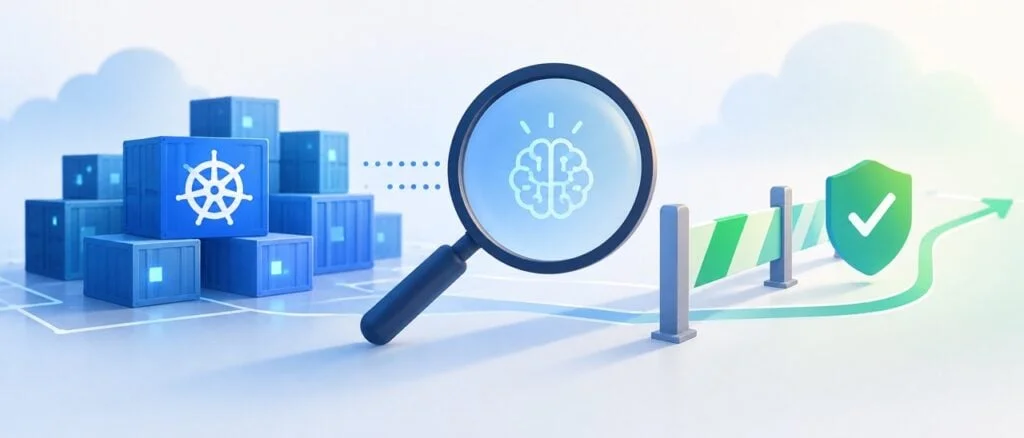
Platform teams can harness AI to accelerate Kubernetes troubleshooting without compromising control over their clusters.
Deploying AI solutions in Kubernetes environments stirs both enthusiasm and apprehension. On one hand, developers often encounter various issues such as pending pods, image pull failures, and inaccessible GPU resources, creating a demand for tools that can quickly sift through logs, events, and configurations. On the other hand, granting AI tools the ability to manipulate production workloads raises significant risks.
K8sGPT as a Case Study
K8sGPT, classified as a Sandbox project by the CNCF, serves as an excellent focal point for these discussions. Its core function is to analyze Kubernetes clusters and assist in diagnosing common challenges. However, the true value lies in how K8sGPT integrates AI into operational workflows, ensuring that while it provides useful insights, it does not overreach in its capabilities.
Defining Boundaries for AI Activity
In this context, it’s not about whether AI assistance can aid in troubleshooting — it likely can. The pressing question is about defining what actions the assistant should be permitted to perform. My approach is straightforward:
Read → Explain → Recommend → Human Approves → Act
The first step involves allowing the AI to read the current state of the Kubernetes environment. Tasks like inspecting pods, deployments, and resource requests are where K8sGPT shines, surfacing insights faster than a human could navigate the same data without altering the cluster's state.
Explanation and Privacy Considerations
Once it has gathered data, the AI can provide explanations. Although Kubernetes events yield critical information, they can be unintelligible for less experienced users. By translating these raw signals into user-friendly summaries, K8sGPT can clarify issues for developers who may not have in-depth operational knowledge. For example, instead of presenting a series of events regarding a GPU resource request, K8sGPT can articulate that a specific workload is pending due to a lack of available nodes that can fulfill the request.
However, sharing data with an AI backend during explanation mode raises privacy concerns; internal identifiers like pod names or events may inadvertently leak insights about a company’s architecture. Consequently, teams must carefully consider which data can be sent and whether anonymization is necessary. They should also evaluate when it may be more prudent to utilize local models instead of relying on external services.
Recommendations Without Acting
Following the explanation phase, K8sGPT can make informed recommendations. It can suggest specific actions, such as verifying a service selector or checking resource quotas, without executing any changes itself. By refining the focus of the investigation, these suggestions become valuable guidance without altering the cluster.
The Role of Model Context Protocol (MCP)
The Model Context Protocol (MCP) adds another layer of security and control. This feature restricts the AI assistant to a defined set of diagnostic tools rather than granting it broad access. By doing so, it creates a framework that allows for greater safety in interactions, ensuring that teams can manage their operational environment responsibly.
A Gradual Path to Remediation
For most organizations, a conservative approach is wise. Start by granting the AI read-only access to assess cluster health, read logs, summarize failures, and offer recommendations. Once this is established and deemed reliable, teams can explore enabling more comprehensive capabilities. The last step should be remedial actions, where AI might suggest GitOps pull requests rather than instantly applying changes. Automating corrections requires comprehensive policy checks, audit trails, rollback plans, and a clear human approval pathway.
Future Implications for Developer Platforms
This strategy is not an anti-automation stance; instead, it emphasizes the necessity for robust platform engineering. By enabling AI tools like K8sGPT to function within established parameters, developers gain clearer insights during troubleshooting, Site Reliability Engineers (SREs) receive accelerated resolution paths, and platform teams maintain authority over both data management and action permissions.
As Kubernetes systems evolve with the growing complexity of AI workloads and multi-tenant deployments, the demand for effective troubleshooting will only escalate. AI can accelerate the understanding of this complexity, yet a cautious, incremental approach remains the safest route forward.
Ultimately, letting the AI read, explain, and recommend — all while deferring action to human judgment — encapsulates a disciplined approach that aligns AI with operational integrity.
References:
- CNCF K8sGPT project page: CNCF K8sGPT
- K8sGPT MCP reference: K8sGPT MCP Documentation
- K8sGPT privacy guide: K8sGPT Privacy Guidelines



Discussion
Sign in to join the discussion.