Kubernetes is embracing AI workloads, evolving its capabilities to integrate GPUs and enhance operational efficiency, reshaping enterprise AI management.
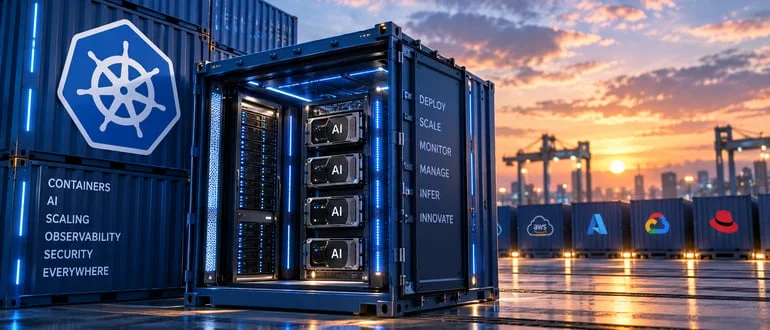
With every new wave of technology, the prevailing infrastructure often faces scrutiny over its relevance. AI is no different, having prompted speculations about the need for a fresh platform designed from the ground up. However, rather than reinventing the wheel, Kubernetes has absorbed the AI movement into its established infrastructure, fundamentally changing its compositional elements to accommodate new challenges.
The Evolution of Kubernetes for AI Workloads
Recent trends indicate that Kubernetes is becoming the backbone for running AI inference tasks. The Cloud Native Computing Foundation (CNCF) reported that 66% of organizations deploying generative AI models are leveraging Kubernetes for at least part of their inference requirements. This is largely due to the familiar challenges Kubernetes addresses—resource management, workload scheduling, and deploying services reliably.
Standardization as a Driving Force
The budding standardization in the Kubernetes ecosystem is evident, particularly through initiatives like the Certified Kubernetes AI Conformance Program, launched in late 2025. This program, which started with 18 platforms, nearly doubled by the next KubeCon event, indicating growing industry consensus on how to run AI within Kubernetes while providing flexibility in where it operates.
Major cloud providers including Amazon, Google, Microsoft, and others have signed on to the program, signaling a collaborative approach to streamline AI workloads rather than asserting a singular platform dominance. The penetrating focus isn’t on the infrastructure, but rather on the methods and standards guiding its execution.
Operational Challenges Drive AI Utilization
Enterprise AI is, at its core, an operations challenge. A staggering percentage of organizations do not actively train models; instead, they rely on pretrained models to integrate into their systems. This reality shifts the core difficulties to areas such as routing, capacity management, observability, and cost control. The existing cloud native architecture has been honing its capabilities to tackle these issues over the past decade, making it well-equipped to handle AI-specific requirements.
The need for a new infrastructure stack has been negated; AI has redefined the existing stack's role, prompting communities to extend their capabilities without radically restructuring their foundational principles.
Dynamic Enhancements within Kubernetes
Among the new additions to the Kubernetes framework are Dynamic Resource Allocation and Kueue, which facilitate effective management of accelerator requests alongside standard CPU and memory quotas. The Gateway API Inference Extension enhances model-aware routing, enabling efficient load balancing and criticality assessments for requests. These integrations are not just theoretical but have demonstrated tangible benefits: Kueue, in certain evaluations, cut total makespan by up to 15%, showcasing how these changes can streamline operations.
As Kubernetes evolves, the complexity of AI workloads necessitates adaptations not solely in the technology itself but also in fundamental operational strategies. AI workloads possess unique characteristics, including high costs, variable requests, and localized dependencies. Addressing these intricacies requires precise scheduling, traffic management, and lifecycle practices, leveraging Kubernetes' existing strengths.
Looking Ahead: The Future of AI in Kubernetes
The potential for AI to drastically shift the workings of Kubernetes, rather than necessitate a new framework altogether, indicates a future of interoperability and incremental evolution. Yet, the challenge will be navigating the commercial landscape, where proprietary solutions for AI gateways and evaluation platforms may emerge, potentially diminishing the broad portability that is essential for cloud native technologies. Maintaining community-driven standards while adapting to rapid commercial developments will be crucial for sustaining Kubernetes' leadership in the cloud-native space.
The ongoing enhancements within Kubernetes, alongside its established operational efficiencies, illustrate how the technology is not just accommodating AI workloads—it's being fundamentally redefined by them. The shift may hold significant implications for how enterprises approach AI deployment, potentially ushering in a new chapter of efficiency and capabilities in the cloud native universe.



Discussion
Sign in to join the discussion.