Explore the architecture of Kafka, a powerful platform for real-time event streaming and data processing.

Kafka serves as a distributed platform designed for real-time event streaming, playing a critical role in data ingestion and processing of live event streams. This technology was built to handle a high throughput of messages across a distributed environment, making it invaluable for modern applications that require immediate insights from data. Whether it's tracking user activity in real time, managing IoT devices, or serving as the backbone of microservices, Kafka's functionality has proven essential in many sectors, including finance, telecommunications, and e-commerce.
Architecture Insights
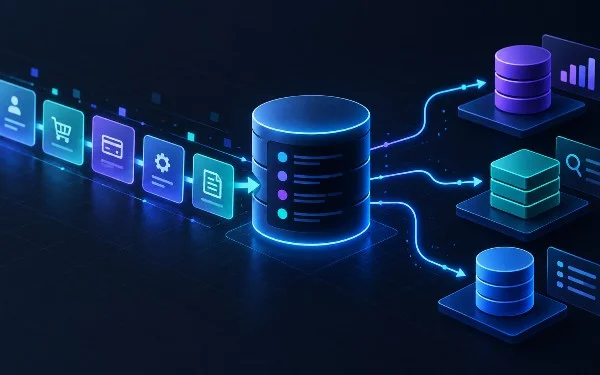
Kafka operates on a publish-subscribe framework, where producers generate events and consumers retrieve them. At a high level, events are published to a broker by producers, who are typically applications or services that create messages based on user actions or system events. Consumers then pull these events from the broker, allowing them to process or respond to events as they occur. This architecture ensures a decoupling between data production and consumption, which is vital for scalability and flexibility.
The interaction between producers, brokers, and consumers is streamlined by the Kafka controller, which is selected through ZooKeeper or KRaft (Kafka Raft). This controller plays a crucial role in managing the cluster's metadata and operations. ZooKeeper, once the dominant choice, provides a set of services for distributed systems, but its reliance can lead to complexity. KRaft aims to simplify this by integrating consensus mechanisms within Kafka itself, which can reduce operational overhead and improve performance.
Understanding Kafka’s Internal Workings
Kafka's architecture is built around key components that work together to ensure reliable event handling. What many users overlook is Kafka’s unique partitioning system. Each Kafka topic can be divided into multiple partitions, allowing producers to write data in parallel and consumers to read from these partitions simultaneously. This partitioning not only enhances throughput but also provides resilience, as data can continue to be processed even if one partition encounters a failure.
Messages in a Kafka topic are stored in a structured immutable log format, ensuring order within partitions. This order is significant for applications where the sequence of events matters. Whether you're tracking transactions in a financial system or logging user interactions on a website, the ability to replay messages from a particular point in time can be invaluable.
Kafka in the Industry
While Kafka has gained immense popularity as a messaging system for event streaming, it’s essential to understand its position in the broader market. Similar systems typically include Apache Pulsar and RabbitMQ, which offer different advantages based on use cases. Apache Pulsar, for example, supports multi-tenancy more natively, which can benefit organizations with varied workloads. On the other hand, RabbitMQ's strength lies in queue-based messaging patterns, which can serve specific use cases better than a traditional streaming approach.
This diversification in choices allows businesses to select a message broker that aligns with their architectural plans and operational necessities. But Kafka's dominant position can be attributed to its performance and scalability features — characteristics that resonate well with enterprises that handle massive datasets and require real-time processing capabilities.
Challenges and Limitations
Despite its strengths, Kafka has its fair share of challenges. One prominent issue revolves around operational complexity. Kafka requires careful configuration and management, especially in larger deployments where scaling can lead to both hardware constraints and software intricacies. Another factor is the learning curve associated with Kafka’s ecosystem; understanding its internal mechanics can take time and resources that many organizations may not be willing to invest.
There's also an ongoing debate about Kafka's durability vs. performance trade-offs. While Kafka guarantees that messages are persisted in a distributed fashion, under certain configurations, this durability can affect the system's latency, a critical aspect for time-sensitive applications. If you're working in this space, you might find that the nuances of tuning Kafka for your specific needs can make a significant difference.
Future of Event Streaming with Kafka
As businesses continue to demand real-time insights, the future of event streaming is likely to see innovations that further optimize platforms like Kafka. Several trends are emerging. Organizations are progressively integrating machine learning capabilities to analyze streaming data on the fly. Incorporating AI into Kafka streams can provide predictive analytics that enhances decision-making processes, thereby increasing operational efficiency.
This is more significant than it looks. Companies are recognizing that being able to act on data instantly can provide them with a competitive edge. Imagine a retail operation adjusting its pricing dynamically based on real-time customer interactions across multiple channels. The implications of event streams being processed with machine learning could transform entire sectors, pushing towards an era of proactive rather than reactive strategies.
Moreover, as distributed architectures gain traction, we could see Kafka’s role evolve alongside other technologies such as Kubernetes for orchestration and cloud-native environments. This evolution will likely further align Kafka with modern development practices, making it easier for teams to deploy and manage event-driven applications at scale.
In summary, Kafka stands as a powerful tool for event streaming, but it’s not without its challenges. As the technology matures, organizations will need to weigh the pros and cons of adopting or scaling Kafka against their operational needs. The future is clear: event streaming is here to stay, and Kafka is at the forefront of this evolution.
Discussion
Sign in to join the discussion.