The A3 framework assigns AI tasks to assist, automate or avoid, with task-specific checks and monthly audits to catch drift.

AI delegation needs explicit boundaries
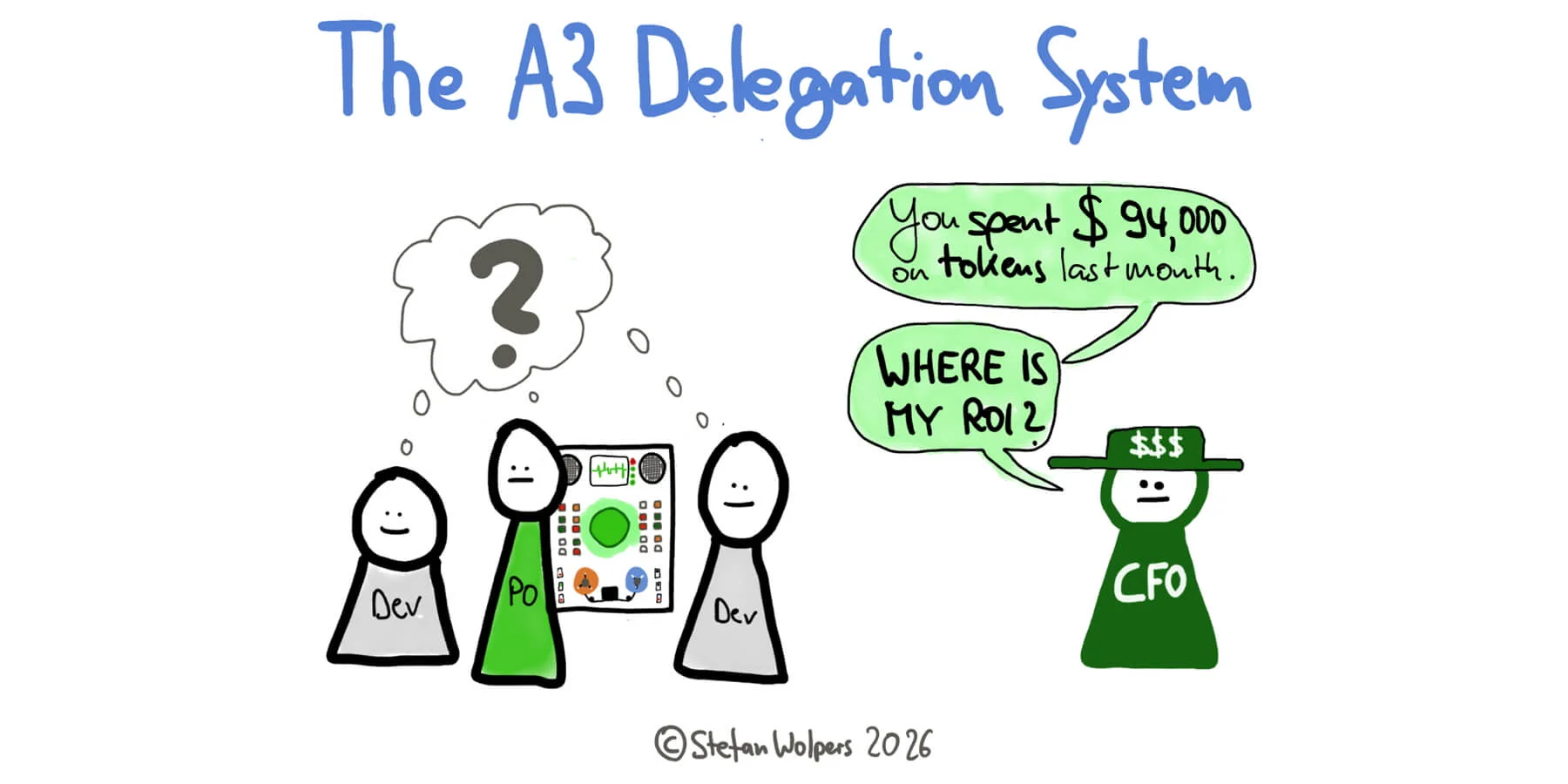
AI workflows can inherit familiar Agile failures: unclear ownership, missing documentation and weak handoffs. Those problems become harder to spot when a model produces work quickly and the process around it stays informal. In a video from the 76th Hands-on Agile Meetup, the A3 Delegation System applies practices such as a Definition of Done and retrospectives to catch those failures across a six-stage Delegation Lifecycle.
The framework sorts work into three categories: Assist, where AI drafts and a person owns the result; Automate, where AI acts under explicit rules and scheduled audits; and Avoid, where the cost of failure makes human handling preferable. Those labels give teams a starting point for deciding who is accountable, what checks are required and where automation should stop. They also make clear that AI use isn't one uniform operating model: the right level of delegation depends on the task.
The tricky transition is from Assist to Automate. Several weeks of acceptable output can make a change in responsibility easy to miss, especially when people gradually stop checking work that has seemed reliable. That's a process risk as much as a model risk. A team needs a visible decision point before human review is reduced, with rules that describe what the system may do and what still requires a person.
Set quality and model choices by task
Each category calls for a deliberate model choice. Teams can route tasks to local, mid-tier hosted or frontier models according to cost and stakes, rather than treating the most capable option as the automatic choice for every job. That approach recognizes a basic trade-off: a task with limited consequences may not need the same model or review effort as one where an error could have a larger impact.
The guidance also treats proprietary process data as a competitive asset, arguing that it should stay out of large labs. That's a firm position, and it puts data handling inside the delegation decision rather than leaving it as a separate technical detail. Teams need to know what information a task contains and where it goes before deciding which system can handle it. The framework doesn't make those judgments for them; it gives them a reason to state the boundary.
A single Definition of Done may suit Scrum, but AI work needs criteria for each task class. The proposed checks cover verification, disclosure of provenance, data hygiene and the required level of sufficiency. Those criteria turn a general expectation of “good work” into questions a reviewer can answer: has the output been checked, is its origin clear, and is it complete enough for its intended use? One standard for every task would obscure these differences.
Audit for gradual drift
Monthly reviews can track changes in output quality, sufficiency, reversibility and how much human review tasks receive. The point is to examine how a workflow is operating over time, not just whether its first version passed a test. A task can stay nominally the same while the quality of its outputs or the amount of attention people give them changes.
A draft approved in four seconds may have been rubber-stamped rather than assessed, the framework warns. This is more significant than it looks: a review step on paper doesn't provide much protection if people no longer have time or reason to question the result. (And this is the part most people overlook.) Review effort is itself a signal that a delegation arrangement may need attention.
Some approvals are cursory. Others are careful.
What delegation records can show
These working artifacts can also form a governance trail for questions from finance, technology and procurement teams. They can show who owns a task, what standards apply and when the team last reconsidered the arrangement. That record won't guarantee good decisions, but it can make gaps easier to find and responsibility harder to blur.
Here's the thing: a delegation framework is useful only if teams keep it connected to daily work. If you're working in this space, document who owns each AI task, what “done” means and when its delegation should be reviewed. The practical takeaway is simple: treat the move from assistance to automation as an explicit change in responsibility, with criteria people can revisit.

Discussion
Sign in to join the discussion.