CIQ’s open-source Stratum SKE packages Kubernetes deployment and lifecycle tools in one signed binary, with tiered access for AI agents.
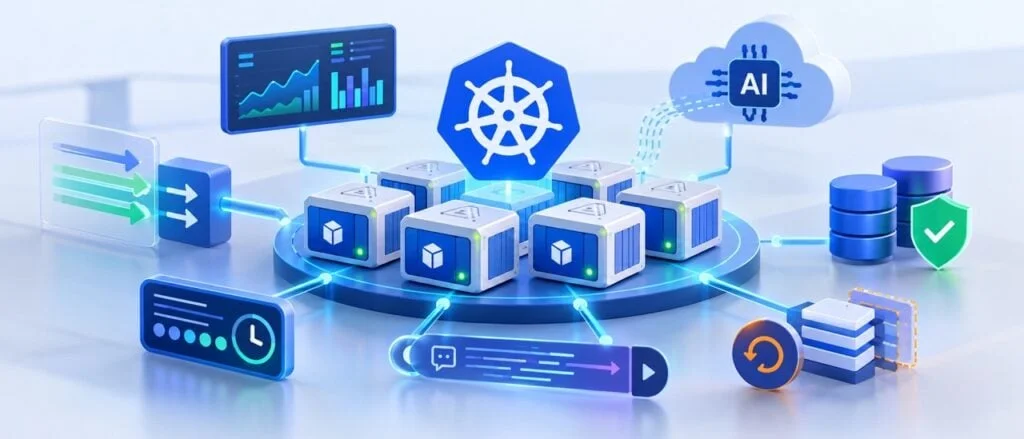
Kubernetes operations often get harder after the first successful install. CIQ’s new Stratum Kubernetes Engine (SKE) targets that ongoing work by packaging a set of upstream components into one signed binary, with tools for installation, upgrades, recovery and controlled automation. The approach may appeal to teams running Kubernetes across developer machines, cloud systems and GPU infrastructure, where keeping environments aligned can take as much effort as bringing up a cluster.
A single package for a multi-project stack
CIQ, known for Rocky Linux, says SKE combines around ten upstream projects that otherwise release and evolve on separate schedules. The company says it builds from unmodified upstream source. Its pitch is that administrators can install, join and upgrade a cluster through the same binary, rather than assembling and maintaining each component separately.
That packaging decision addresses a familiar operational problem: Kubernetes depends on networking, storage, security, monitoring and scheduling components, each with its own configuration and lifecycle. Hybrid environments add differences in Linux distributions and infrastructure, while AI and high-performance computing workloads can bring GPU and specialized workflow requirements. Coordinating those moving parts can create drift between clusters and between development and production.
CIQ CTO Peter Nelson describes SKE as a way to make Kubernetes easier to start with through both a visual interface and a command line. He says developers can run it on a desktop, then move the same binary to cloud infrastructure. The intended benefit is consistency: a workload tested locally should behave the same way when deployed to production.
That promise depends on more than simplifying the initial install. SKE pins and tests its components as a set, according to CIQ. Rolling upgrades check node health at each stage and can roll back a node that fails. The system takes etcd snapshots every 12 hours by default, renews certificates before they expire, and signs each release with a software bill of materials. These details make the product’s lifecycle approach more consequential than the one-file installer alone.
Automation with defined boundaries
SKE also includes an MCP server that lets AI agents interact with clusters through 37 tools. The tools are grouped into read, write and destructive tiers. Operators choose the level to enable; tools above that level aren’t registered. Kubernetes access controls still apply to each call, and secrets remain inaccessible to agents.
That design gives platform teams a way to make selected cluster tasks available to agents while limiting the actions they can take. An AGENTS.md file provides guidance for agent-driven installations, and CIQ publishes documentation in llms.txt format. The product also includes a web dashboard with views for pods and logs, plus shell access.
These features reflect a practical distinction in AI infrastructure: connecting an agent to a cluster is only part of the job. Teams also need to set boundaries around what the agent can inspect or change. SKE’s tiered tools and existing Kubernetes permissions provide controls for that access, though the source does not describe how organizations should configure those controls for particular workloads.
CIQ cites a 2026 survey of 785 Kubernetes decision makers: 62% said complexity was slowing business initiatives, while 65% reported running air-gapped clusters. Those figures help explain the product’s emphasis on packaging and operational control. A single binary and outbound-only fleet connection may suit constrained environments, but organizations will still need to assess how the included components fit their own deployment and security practices.
Open-source core and paid fleet management
The free, open-source SKE edition supports a single cluster and includes a web UI. CIQ’s commercial Stratum Pro subscription extends management across SKE clusters, from GPU systems to general-purpose fleets, through the same interface and a single sign-on. It adds an application catalog, CIQ support and an optional CIS hardening profile with checks for individual controls.
Stratum Pro’s fleet agent connects outbound only, so managed clusters don’t need inbound ports. CIQ says Cluster API provisioning is planned for a later release. Pricing for the commercial subscription is expected at general availability; the company hasn’t provided a figure in the announcement.
The product’s separation between a free cluster engine and paid fleet capabilities gives teams a path to try the underlying distribution before deciding whether they need centralized management and support. The distinction will matter to organizations comparing SKE with established Kubernetes offerings: the open-source package covers a single cluster, while fleet management and additional controls sit behind the commercial tier.
Linux support and availability
SKE runs on Enterprise Linux 9 or later, including Rocky Linux, RLC Pro AI and RLC Pro Hardened, on both amd64 and arm64. CIQ says teams can keep their existing supported operating system rather than adopting a vendor-specific node OS. SKE also works alongside Warewulf Pro for node provisioning, Fuzzball for HPC and AI workflows, and Ascender Pro for automation; each product can run independently.
At the time of the announcement, SKE was in technical preview, with general availability expected November 5. It is released under the Apache 2.0 license. Both editions are distributed through CIQ Depot and the CIQ Portal, with one binary for each supported architecture and public documentation at docs.ciq.com.
The central question for prospective users is whether CIQ’s packaging can keep a cluster’s components aligned through upgrades as reliably as it simplifies the first deployment. The shared binary, health checks, rollback behavior and scheduled etcd snapshots give teams concrete mechanisms to evaluate. For AI and GPU environments, SKE’s value will come down to how well those mechanisms hold across the systems a team already operates—and whether its controlled agent access fits the work it wants to automate.



Discussion
Sign in to join the discussion.