AI may expand development capacity, but software teams remain constrained by time, skilled talent and the cost of people and infrastructure.
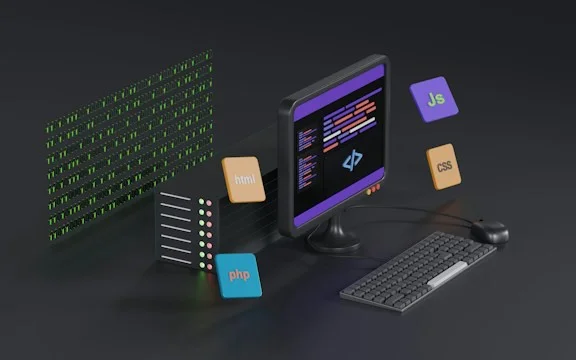
AI may help teams produce software faster, but development capacity still depends on three hard constraints: time, cost and expertise. Technical limits, available compute and network throughput matter too; the rapid buildout of data centers shows how access to computing resources can become a bottleneck. That tension is easy to miss when discussion focuses on what a model can generate. A tool may draft code quickly, but the work still has to be specified, checked, integrated and operated. Faster production at one stage doesn't automatically shorten the whole delivery process.
The costs behind development capacity
Software work requires skilled coders and architects, whose salaries can be substantial. Hiring them takes time and money, even for organizations able to pay for experienced staff. Teams also need infrastructure to build, test and ship applications, including cloud compute, storage and data transmission. My read is that AI can change how much work a team completes, but it doesn't erase the resources required to deliver software.
Those costs are connected. A team that adds people may need more coordination, review and shared infrastructure. A team that leans on AI tools may still need experienced staff to define requirements, judge whether generated code fits the system, and diagnose failures. The expense can shift between activities, but the underlying need for competent work remains. In some settings, AI could reduce the time spent on routine tasks; in others, checking and adapting its output may absorb much of the time saved.
Time is a capacity limit in its own right. Product work involves choices about what to build, how it should behave, and which competing needs take priority. Even a team that can produce code quickly can't instantly resolve unclear requirements or coordinate decisions across the people responsible for a product. Delays at those points can leave faster coding with little effect on the date a usable application is ready.
AI changes the shape of the work
AI assistance is best understood as a change to parts of the development process, rather than a replacement for the process as a whole. Similar tools can help with tasks such as drafting code, explaining unfamiliar material or producing a first pass at a routine implementation. That can give developers more room for design and problem-solving. But a generated answer still needs to be evaluated against the actual software, its constraints and the team's standards.
Code doesn't exist in isolation. It has to work with other components, handle expected and unexpected inputs, and remain understandable to the people who maintain it. A suggestion that looks plausible in a small example may not account for dependencies, security needs, performance limits or the behavior of a larger system. Those judgments require context. If you're working in this space, the useful question isn't just how quickly a tool can produce code; it's whether the team can verify and support the result.
And yet, even modest reductions in repetitive work could matter when they accumulate across a project. Developers might spend less time on a narrow task and more on reviewing system behavior or clarifying what users need. The benefit depends on whether the saved time is actually redirected toward work that improves the product. Without that change in how teams organize their effort, higher output may simply mean more code to maintain.
Compute, networks and the physical limits
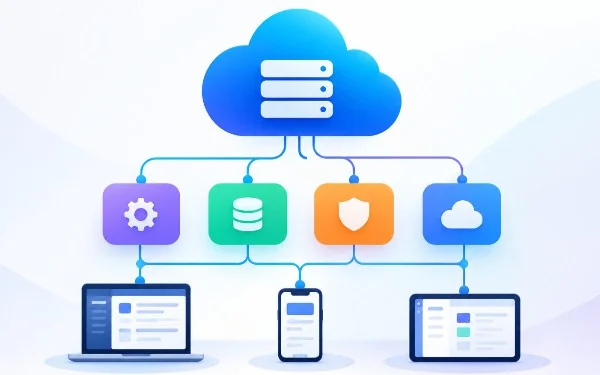
Software development increasingly relies on infrastructure that is out of sight for many users: processors, memory, storage and the networks that connect them. AI systems can require substantial computing resources, and applications built or operated with those systems may depend on reliable access to them. The source's reference to data center expansion points to a basic constraint: digital work still runs on physical equipment, and that equipment has to be available where and when it is needed.
Compute capacity isn't the only concern. Data has to move between users, services and storage, and network throughput can affect how quickly those exchanges happen. A task that depends on remote services may be slowed by congestion or limited bandwidth even when the software itself is ready. Infrastructure planning therefore shapes what teams can build and how reliably they can deliver it. (And this is the part most people overlook.) A development tool can feel instantaneous to an individual while depending on a much larger chain of machines and connections.
Building out data centers can expand the supply of computing resources, but construction alone doesn't guarantee that every organization will have easy access to the capacity it needs. Teams still face choices about where workloads run, how much infrastructure to reserve, and how costs change as usage grows. The details vary by application, yet the general point holds: software capacity is partly a question of access to machines and networks, not only the number of developers or the speed of their tools.
What productivity claims leave out
Claims about faster software production can be difficult to interpret because “faster” may describe only one measure: how quickly code is written. A team might produce more drafts in less time while still spending substantial effort on testing, review, integration and maintenance. It might also discover that a faster start creates more work later if the output doesn't fit the system. The useful measure is whether a team can deliver software that works and can be maintained with the resources it has.
This is more significant than it looks. If AI reduces a bottleneck in coding, another constraint may become more visible: the availability of experienced reviewers, clear product decisions, compute or network capacity. Removing one obstacle doesn't remove all of them. It changes where pressure accumulates.
There is also a difference between adding capacity and using existing capacity differently. A tool that helps a small team complete routine work may let it tackle more tasks, but it won't necessarily make every task appropriate for automation. Work that depends on domain knowledge, careful judgment or coordination can remain demanding. A measured view leaves room for real productivity gains while asking what stage of the work improved and what costs remain.
Implications for teams
Organizations assessing AI's effect on software development need to look across the full delivery process. They can ask where teams lose time, which tasks are repetitive, how generated work is reviewed, and whether infrastructure can support wider use. Those questions connect tooling to practical capacity: people, budgets, compute and network access. A change in one area may help, but the overall result depends on how the pieces fit together.
The constraints won't disappear simply because code becomes easier to draft. AI may let teams do more with the expertise and equipment they already have, though the size and location of that gain will vary. Time, cost and skill still set limits, while computing and network resources determine what can run at scale. Software development remains bounded by the people, time and infrastructure an organization can bring to the work. And that means.
Software development remains bounded by the people, time and infrastructure an organization can bring to the work.

Discussion
Sign in to join the discussion.