Discover how Azure's Model Context Protocol addresses two significant challenges in AI development for cloud engineers.
Addressing AI Development Challenges
As Large Language Models (LLMs) evolve rapidly, developers face two major hurdles: first, their intelligence is limited by a fixed knowledge cutoff, rendering them unaware of real-time updates. Second, LLMs are initially incapable of securely interacting with external systems or proprietary APIs. These challenges complicate the deployment of LLMs in practical applications, especially in fields where timely data is critical, such as finance or healthcare. In these sectors, a model that lacks the most up-to-date information can lead to decisions that are not just suboptimal but potentially harmful.
The reliance on static knowledge bases means that developers must think creatively when it comes to integrating LLMs into dynamic environments. For example, imagine a financial advisor using an LLM for investment advice. If the model doesn't have access to real-time stock data or the latest news on economic indicators, its outputs may be irrelevant or misleading. This gap necessitates robust solutions that allow LLMs to interface effectively with live systems, reducing the risk of errors stemming from outdated information.
The Limitations of Traditional Solutions
In the past, developers typically managed these issues through the creation of fragile API wrappers or custom orchestrators, which often resulted in complex and unreliable integrations. This complexity not only increases the time and cost of development but also raises the chances of failure. Such bands of code require meticulous maintenance and regular updates, especially when external APIs themselves undergo changes. A developer's nightmare, indeed.
Moreover, traditional integration methods often lack standardization. Developers are forced to reinvent the wheel each time a new project begins, leading to a fragmented ecosystem of solutions. Such fragmentation doesn't just create inefficiency; it hampers collaboration among teams who may rely on different approaches to interface with LLMs. The result? Disparate systems that are challenging to manage and prone to compatibility issues.
However, these challenges aren’t merely technical. They reflect broader issues within the AI industry regarding how to responsibly scale these models while ensuring their reliability and security. With regulatory pressures increasing, developers are searching for compliant and scalable solutions that can also streamline their workflows.
Introducing Azure MCP Server
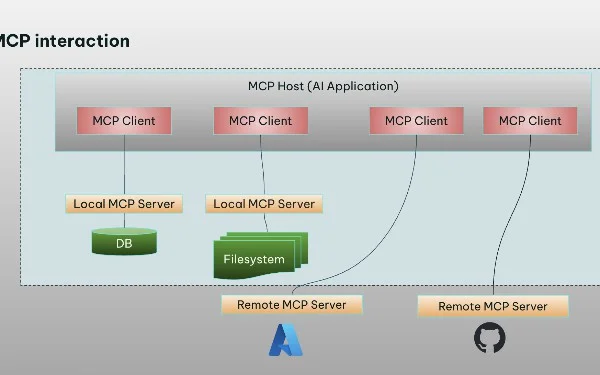
The Azure MCP Server represents a significant advancement for cloud engineers. It standardizes the connection process for AI applications to safely interact with external data sources and execution environments. By enforcing a protocol for communication, Azure MCP Server lowers the bar for developers looking to integrate LLMs with other systems.
One of the standout features of the Azure MCP Server is its architecture. This setup allows for well-defined interfaces between services, making it easier for developers to plug and play APIs as needed. For example, if a financial service provider wants to incorporate real-time stock feeds alongside customer service capabilities, the Azure MCP can simplify that integration. Here's the thing: this means you can focus more on building intelligent applications rather than wrestling with the underlying code complexities.
In terms of security, the Azure MCP provides a controlled environment that can manage access permissions and data privacy concerns more effectively than previous methods. Developers can set specific rules governing how data is accessed, offering peace of mind in sectors like finance and healthcare where breaches could have serious repercussions.
Setting up Azure MCP Server in Visual Studio Code is relatively straightforward, which further democratizes access to high-functioning AI integrations. Developers from various backgrounds, even those less experienced with cloud technologies, can take advantage of this framework. It invites a new wave of experimentation and application development that could redefine our relationship with artificial intelligence.
Implications and Future Outlook
The introduction of the Azure MCP Server has significant implications for both developers and businesses looking to harness LLMs. For developers, it offers a streamlined path to building sophisticated applications that are less prone to failure. Companies can finally start treating LLMs not just as marketing gimmicks but as genuine business enablers.
What this means for you, the developer or business leader, is that you'll likely see an increased focus on secure, reliable integrations in upcoming AI projects. This might affect how teams structure their workflows and prioritize the technologies they choose to implement. As organizations become more aware of the importance of data governance and security in AI practices, tools like the Azure MCP Server could become industry standards, much like REST APIs are today.
And yet, while the enthusiasm surrounding Azure MCP is infectious, we must remain cautious. The potential for over-reliance on a centralized system can create single points of failure. If the MCP service experiences downtime, applications relying on it could face serious interruptions. Additionally, the complexities of evolving regulatory frameworks around data protection mean that developers must stay vigilant, ensuring compliance as new standards emerge.
The balance between innovation and caution is delicate. If you're working in this space, you'll want to keep a close eye on how Azure MCP is adopted and how it reshapes the current state of AI application development. The future might hold exciting possibilities, but the transitional phase will likely harbor its own challenges to navigate.

Discussion
Sign in to join the discussion.