DevOps
Development operations, CI/CD, and automation

Transforming WordPress through Headless Architecture on Kubernetes
Explore how headless configurations and Kubernetes empower WordPress scalability and flexibility for modern applications.

Ray-Ban Meta Audio Glasses: Ditching the Camera for Everyday Convenience
The Ray-Ban Meta Audio glasses prioritize user experience by eliminating the camera, enhancing functionality while keeping hands free for everyday activities.

Reassessing Visual Regression Testing: Beyond Pixel-Perfect Comparisons
Visual regression testing often reports false positives due to minor rendering differences. A focus on visual intent can better validate design fidelity.

ECS Task Management Challenges: Overcoming Output Duplication in Deployments
ECS deployments can inadvertently cause output duplication; understanding task replacement assumptions is key to maintaining data integrity.

Enhancing CI Systems with Targeted AI Repair Solutions
AI is making strides in automating CI failure repairs by turning extensive data into precise fixes, while avoiding common pitfalls.

Simplifying AI Tools: A Pragmatic Approach for Agile Teams
The "Jobs Matrix for AI" streamlines AI tool selection by categorizing use cases for agile practitioners into four key areas.

Understanding Kafka's Architecture for Event Streaming
Explore the architecture of Kafka, a powerful platform for real-time event streaming and data processing.

Unpacking AI Memory: The Nuances of Context Windows and Information Retention
Understanding AI memory involves distinguishing between stored knowledge, temporary access, and retrieval systems, especially within context windows.

Capturing Critical Context: Why Mobile Apps Must Retain User Data Before Crashes
Most mobile app crash reports miss vital user actions and events that lead to faults. Retaining this context is essential for improved troubleshooting.

Transforming GPU Resource Management for Efficient AI Workloads
Static quotas for GPU allocation are failing in modern AI; a new orchestration layer can enhance efficiency and uphold user trust.

Enhancing LLM Quality Testing: Beyond Conventional Unit Tests
Unit tests can't fully capture the behavior of LLMs in production; embracing statistical evaluation of output is key to ensuring quality and reliability.

Rethinking Volatility Bands: Accurate Alternatives for Financial Forecasting
Understanding the pitfalls of traditional volatility bands can lead to more accurate financial predictions and dependable interval calculations.
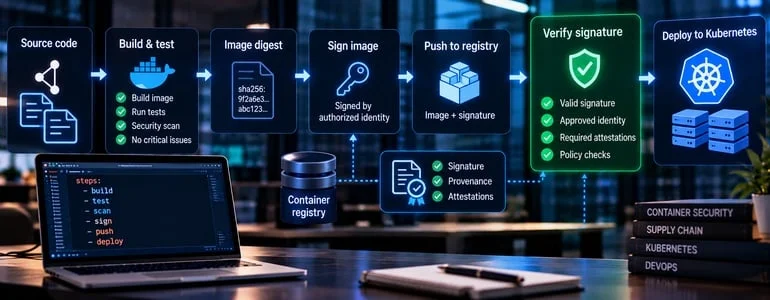
Enhancing Software Security with Container Image Signing in CI/CD Pipelines
Container image signing is crucial for ensuring the integrity and authenticity of software artifacts throughout the deployment process.

Advancements in AI Coding Agents for Enhanced Software Development Automation
AI coding agents are evolving beyond code completion, focusing on dynamic process selection and precise workflow control in software development.

The Resurgence of Classification Tasks in the Age of LLMs
Classification remains central to machine learning, but LLMs may not always be the right tool for the job.
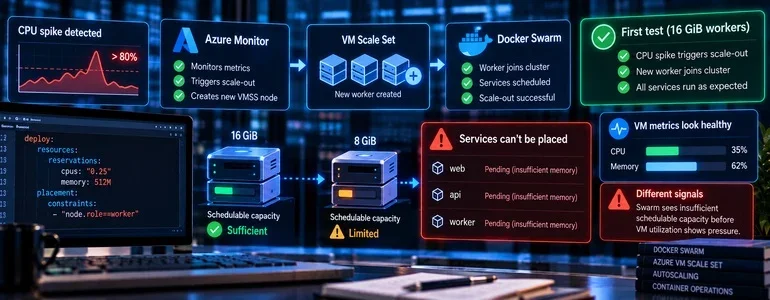
Understanding the Disconnect in Autoscaling and Scheduling Efficiency
Explore how misalignments between autoscaling and container scheduling can hinder efficient resource management in cloud environments.

Optimizing Costs in Azure Kubernetes Service: Analyzing Resource Utilization Trends
Despite increasing investments in AKS, enterprises face low resource utilization, leading to significant waste; optimizing environments is crucial for efficiency.
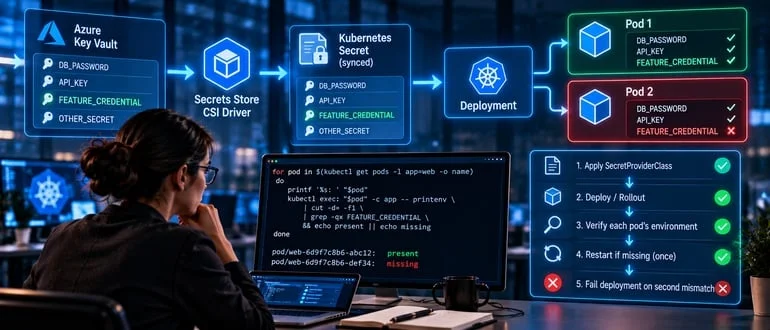
Understanding Kubernetes Secret Discrepancies Among Pods
Kubernetes deployments can lead to mismatched environments, particularly when secrets are synchronized at different times. Here’s how to tackle this issue effectively.

Essential Production Practices for AI Applications on Kubernetes
Discover key strategies to enhance AI application deployments on Kubernetes, focusing on metrics, scaling, and security for production readiness.

Embedding Wasm into Neo4j: Practicality Meets Complexity
Exploring the feasibility of incorporating Wasm into Neo4j reveals intriguing possibilities, yet practical implementations remain elusive.